 Login
Login
Arsyet në sfond të rebelimit
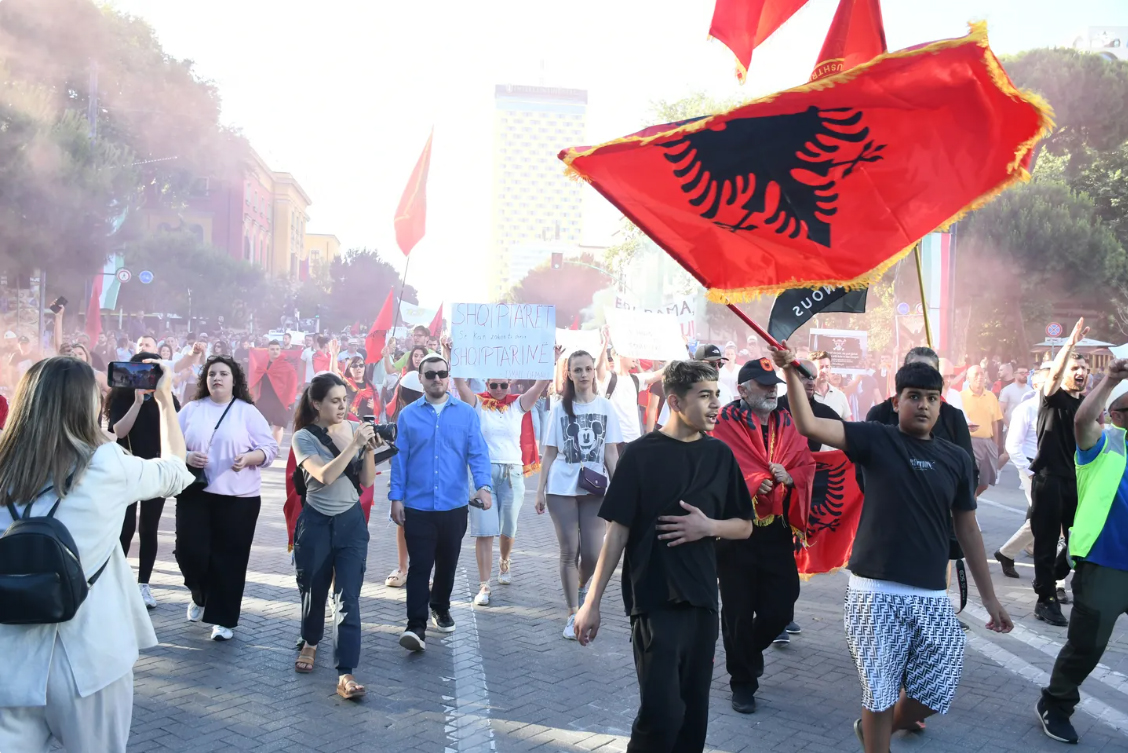
Protestat e të rinjve kanë nxjerrë në sipërfaqe pakënaqësitë e akumuluara prej vitesh ndaj një sistemi që nuk po u ofron perspektivë. Papunësia e tyre u rrit këtë vit me mbi 16%, ndërsa një në pesë të rinj nuk është as në punë, as në shkollë. Qiratë e papërballueshme, pagat e ulëta dhe zhvlerësimi i diplomës po e bëjnë gjithnjë e më të vështirë pavarësinë ekonomike. Arsimi po humbet cilësinë dhe besimin e të rinjve dhe nga ana tjetër, korrupsioni, mungesa e meritokracisë dhe zhgënjimi nga politika po e thellojnë revoltën. Ndërkohë, popullsia e moshës 0-29 vjeç është tkurrur me 54% që nga viti 2001, duke dobësuar edhe peshën e tyre në vendimmarrje. Emigracioni mbetet një alternativë për shumë prej tyre, por një pjesë e brezit të ri po zgjedh të protestojë për të ndryshuar të ardhmen brenda vendit.
Blerina Hoxha
Dy studente nga Shkencat e Natyrës, të kuruara bukur, të hareshme dhe pa maska në fytyrë, pothuajse me vrap po afroheshin drejt turmës ku po zhvilloheshin përleshjet mes policisë dhe të rinjve, me një lloj ngazëllimi, sikur po shkonin në ngjarjen më të madhe të jetës.
Dhe me gjasë, ashtu ishte! Në mes të ngutjes dhe kuriozitetit, njëra ndaloi kur i thamë që jemi gazetare.
“Na falni, por nuk na pëlqejnë TV-të, nuk duam të dalim”, u përgjigj njëra, e cila pastaj u qetësua kur nuk pa kamera. “Jam në protestë se ky sillet me pushtetin sikur të jetë prona e tij. Boll më! Po paguaj 60 mijë lekë të reja qira në muaj dhe nuk kemi ujë.
Studioj për informatikë dhe bëjmë mësim nga laptopët tanë”. Vajzat vijuan me ngut, teksa aty pranë një grup djemsh sollën një çantë plot me maska, syze dhe mjete mbrojtëse. Gjatë bisedës mësuam që ishin edhe studentë, nga ata të dhjetës. “Nuk na lanë rrugë tjetër.
Protestuam disa muaj paqësisht, por jo vetëm që nuk na dëgjuan, por nëpërkëmbën pikërisht kauzat tona”. Djali në të njëzetat, që vinte në protestë nga rrethinat e Tiranës, ishte student në vit të parë, tepër i formuar dhe jo tipik për brezin e sotëm.
Me pasione për letërsinë, historinë, politikën, kulinarinë, por edhe tregtinë, i riu ishte vënë në ballë të protestës, sepse, sipas tij, mjetet e tjera kishin shteruar.
Më tej, policët dukeshin gati të dekurajuar, teksa turmat e studentëve ishin organizuar në mënyrë të përkryer dhe befasuese, ndryshe nga skemat e deritanishme.
Një maturante te “Sami Frashëri” tha se organizimi për bojkot ndodhi brenda një ore në WhatsApp. “U mor një vendim demokratik me votë. Bojkoti mori shumicën e votave dhe të tjerët e pranuan. Kështu, kanë vendosur t’u bashkohen studentëve”.
Të rinjtë e sotshëm në moshë studentore u rritën në një ambient të kontaminuar me lajme ku shteti ishte bërë palë me krimin kundër interesave të qytetarëve, ku taksat e prindërve shpërdoroheshin për përfitime vetjake të pushtetit, ku militantizmi vlejti më shumë se dija, ku shteti ishte në krah të të fortëve kundër të dobëtëve, ku çmimet fluturonin 10 herë më shpejt se pagat, ku prona e trashëguar zhdukej sa hap e mbyll sytë.
Oferta kulturore ishte po kaq e zymtë. Në vend të talenteve u promovuan emisione ku vlerat u lanë anash, konkurset dhe garat fitoheshin nga ata që kishin lidhje me kastën. Nepotizmi preku arsimin dhe patronazhimi hyri deri në dejet e shkollave fillore.
Ky është mjedisi në të cilin është formuar një brez që sot po shfaq shenja gjithnjë e më të dukshme pakënaqësie dhe rebelimi. Përtej revoltës së zakonshme të moshës, që lidhet me kërkimin e identitetit dhe dëshirën për pavarësi, pakënaqësia e të rinjve shqiptarë ka rrënjë më të thella ekonomike, sociale, politike dhe kulturore.
Por, teksa për shumë vite të rinjtë e panë emigracionin si zgjidhje, kjo valvul shfryrjeje e zemërimit nuk është më aq tërheqëse. 20-vjeçarët e sotshëm janë më të informuar, shumica edhe kanë udhëtuar dhe, siç po shihet nga protestat e ditëve të fundit, kanë vendosur të luftojnë për ndryshime brenda vendit, në vend që të largohen.
Banesat dhe qiratë, pavarësia ekonomike bëhet pothuajse e pamundur
Për të rinjtë që arrijnë të punësohen, sfida tjetër është përballimi i kostos së jetesës. Rritja e çmimeve të banesave dhe qirave, veçanërisht në Tiranë, e ka bërë gjithnjë e më të vështirë jetesën e pavarur për studentët dhe profesionistët e rinj.
Sipas të dhënave të agjencisë “Century 21”, të publikuara nga “Monitor”, në gjashtëmujorin e parë të vitit 2026, qiraja mesatare mujore për një apartament 1+1 në Tiranë arriti në 590 euro, ndërsa për një apartament 2+1, në 954 euro.
Krahasuar me të njëjtën periudhë të vitit të mëparshëm, qiraja për apartamentet 1+1 u rrit me 4,4%, ndërsa për banesat 2+1, me rreth 26%. Për një të ri që sapo ka hyrë në tregun e punës, kostoja e një apartamenti me qira mund të konsumojë pjesën më të madhe të të ardhurave mujore.
Situata është veçanërisht e vështirë për studentët nga qytetet e tjera, të cilët duhet të përballojnë njëkohësisht shpenzimet e shkollimit, ushqimit, transportit dhe strehimit.
“Për të përballuar qiranë më duhet të punoj. Por asnjë punë nuk mjafton, pasi paga nuk mbulon as 80% të qirasë. Ndërkohë, puna me orë të gjata më pengon të arrij rezultatet që dua në shkollë”, thotë një nga studentet protestuese.
Për të rinjtë që nuk kanë mbështetje financiare nga familja, krijimi i një pasurie personale po bëhet gjithnjë e më i vështirë. Kjo situatë po krijon edhe një formë të re pabarazie ndërmjet brezave dhe brenda vetë brezit të ri.
Të rinjtë që trashëgojnë një banesë ose mbështeten nga familja kanë mundësi më të mira për të krijuar pavarësi ekonomike. Ndërsa ata që mbështeten vetëm te paga e tyre përballen me një rrugë shumë më të gjatë drejt stabilitetit financiar.
Në këto kushte, puna dhe arsimi nuk janë më gjithmonë të mjaftueshme për të garantuar një standard të pavarur jetese.
Përkeqësohet tregu i punës për të rinjtë
Kostoja e lartë e jetesës, rritja e çmimeve të banesave dhe qirave, pagat e ulëta dhe vështirësitë për të gjetur një punë të mirë kanë qenë shqetësime në protestat aktuale studentore. Teksa ekonomia dhe pagat janë rritur, kushtet në tregun e punës janë përkeqësuar për të rinjtë.
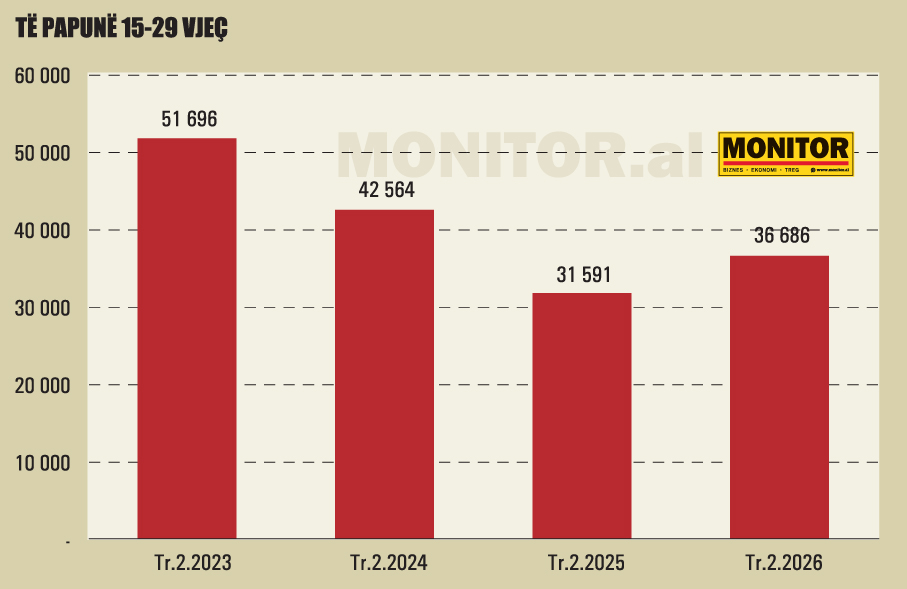
Në gjashtëmujorin e parë të këtij viti, numri i të rinjve të papunë (15-29 vjeç) u rrit me mbi 16%, ose rreth 5.100 persona, pas një rënieje të vazhdueshme gjatë dekadës. Shkalla e papunësisë së tyre u rrit nga 15,1% në 17,7%, në një kohë kur papunësia e përgjithshme në vend ishte në rënie.
Ecuria është edhe më shqetësuese për faktin se numri i të rinjve në popullsi po pakësohet. Një ofertë më e kufizuar e fuqisë punëtore duhet ta bënte më të lehtë punësimin, por statistikat tregojnë se ekonomia shqiptare ka ende vështirësi për t’i integruar të rinjtë në tregun e punës.
Në tremujorin e dytë të vitit 2026, të rinjtë përbënin rreth 35% të të gjithë të papunëve në vend, nga 29% një vit më parë, teksa shihet se papunësia po përqendrohet gjithnjë e më shumë.
Një anketë e INSTAT, e publikuar në nëntor 2024 dhe e trajtuar më parë nga “Monitor”, tregoi se paga mesatare bruto e të punësuarve nën 30 vjeç ishte rreth 36 mijë lekë në muaj në vitin 2022, në ndërmarrjet me më shumë se 10 të punësuar.
Niveli më i lartë i pagës ishte për grupmoshën 40-49 vjeç, me rreth 44 mijë lekë në muaj. Edhe personat mbi 60 vjeç kishin paga afërsisht 10% më të larta se punonjësit nën 30 vjeç.
Megjithëse bëhet fjalë për të dhëna të vitit 2022, ato tregojnë se të rinjtë hynin në tregun e punës me një disavantazh të konsiderueshëm në të ardhura.
Ky hendek është pjesërisht i shpjegueshëm nga përvoja profesionale, por kthehet në problem kur pagat fillestare nuk mund të mbulojnë kostot minimale të jetesës, veçanërisht në Tiranë.
Burimi: INSTAT
Një në pesë të rinj nuk janë as në punë, as në shkollë
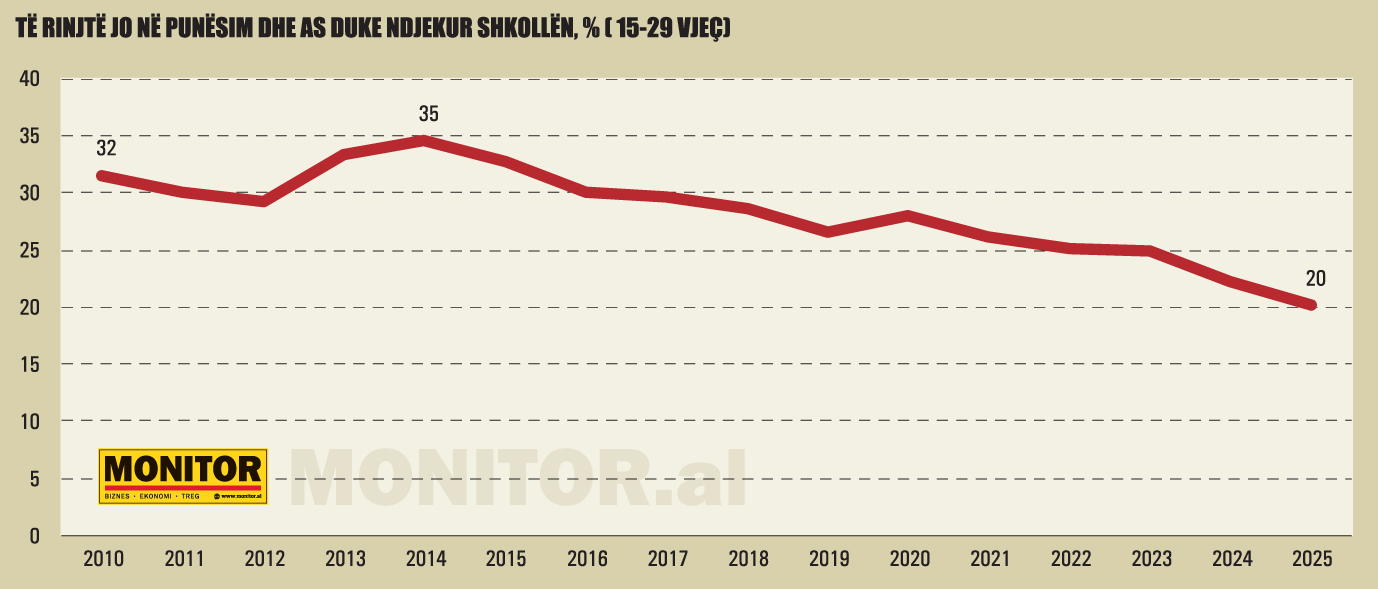
Një tjetër tregues i vështirësive të brezit të ri është përqindja e lartë e atyre që nuk janë as në punë, as në arsim dhe as në formim profesional, të njohur në statistika si NEET. Sipas INSTAT, në vitin 2025, kjo kategori përbënte 20,1% të të rinjve të grupmoshës 15-29 vjeç.
Pra, rreth një në pesë të rinj nuk ishte i përfshirë në proceset kryesore të formimit ose të aktivitetit ekonomik. Përmasat e këtij grupi sinjalizojnë se Shqipëria po humbet një pjesë të rëndësishme të potencialit të saj njerëzor.
Përvoja ka treguar se të rinjtë që kanë kaluar periudha të gjata jashtë tregut të punës dhe arsimit humbasin mundësitë për të fituar përvojë.
Në këto kushte, për këta të rinj, emigracioni konsiderohet një mundësi për të dalë nga ngërçi, ndërsa për disa të tjerë pakënaqësia po shprehet përmes aktivizmit dhe protestës.
Burimi: INSTAT
Të rinjtë si pakicë demografike: nxitet reagimi
Një nga ndryshimet më të rëndësishme të shoqërisë shqiptare është pakësimi i shpejtë i popullsisë së re. Duke qenë pakicë, të rinjtë e kanë të vështirë të ndryshojnë politikëbërjen sipas perspektivës së tyre, pasi politika priret të anojë nga interesat e shumicës së elektoratit.
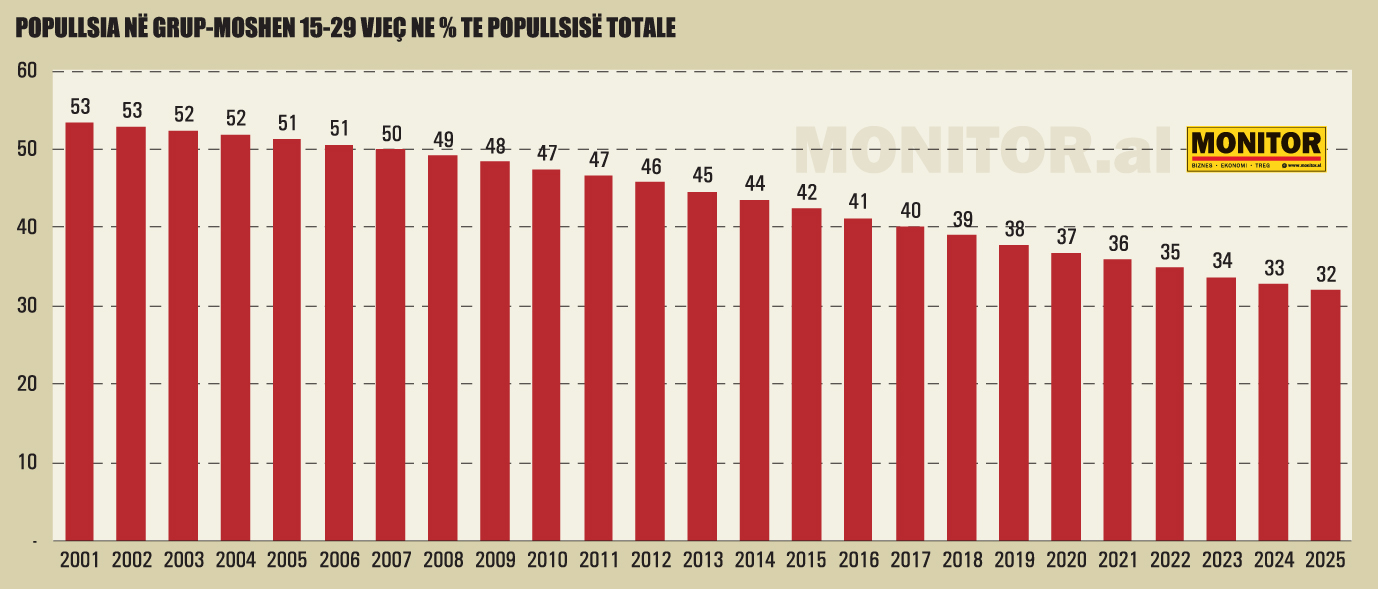
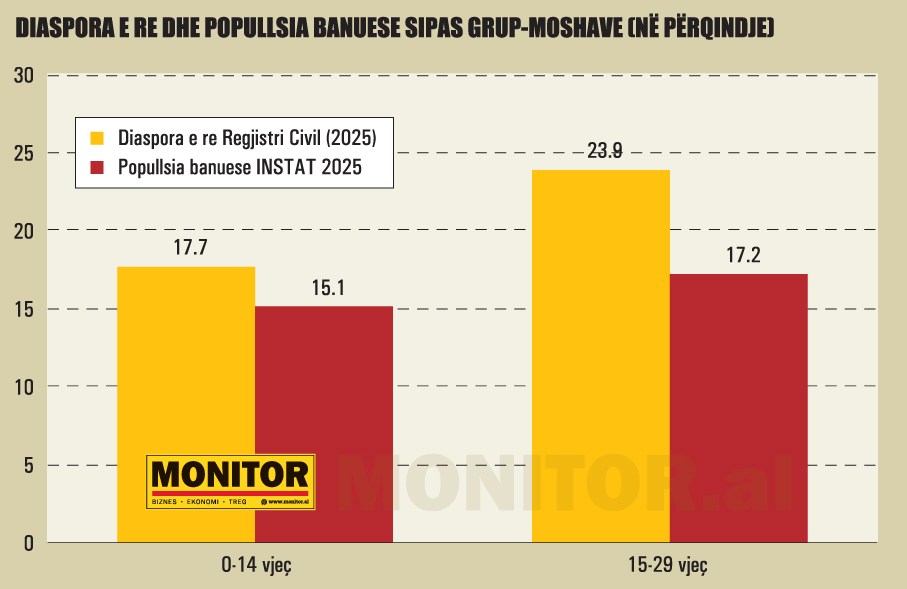
Sipas të dhënave zyrtare, në vitin 2001, popullsia në grupmoshën 0-29 vjeç përbëhej nga mbi 1,6 milionë persona, të cilët përbënin rreth 54% të popullsisë, duke e renditur Shqipërinë si një nga vendet me popullsinë më të re në Europë.
Gjatë dy dekadave e gjysmë, emigracioni i lartë dhe rënia e lindjeve e tkurrën popullsinë e re në moshë me ritmin më të shpejtë në Europë dhe pothuajse në të gjithë botën.
Vitin e kaluar, kjo grupmoshë përbëhej nga 751 mijë persona, të cilët përbënin vetëm 32% të popullsisë së përgjithshme.
Popullsia e re në moshë gjatë kësaj periudhe u tkurr shumë më shpejt se popullsia e përgjithshme. Siç raporton INSTAT, popullsia e vendit ra me rreth 23% ndërmjet viteve 2001 dhe 2025, teksa në grupmoshat e reja 0-29 vjeç, rënia ishte 54%.
Për Shqipërinë, që historikisht ka pasur një strukturë demografike relativisht të re, ky ndryshim po krijon një realitet të ri social dhe ekonomik, pasi ky zhvillim po ndikon në përfaqësimin e interesave të tyre. Në një demokraci, partitë politike kanë prirje të orientohen drejt grupeve të mëdha të votuesve.
Të rinjtë e mbetur tashmë kanë krijuar ndjesinë se vendimet për të ardhmen po merren nga një shumicë më e madhe në moshë, interesat e së cilës nuk përputhen gjithmonë me të tyret dhe, për më tepër, baballarët dhe gjyshërit e tyre vijnë nga sistemi i egër komunist, me mungesë të kulturës së votës dhe demokracisë.
Burimi: INSTAT
Arsimi nuk po shihet më si garanci për një të ardhme më të mirë
Për familjet shqiptare, arsimimi i fëmijëve ka qenë tradicionalisht investimi kryesor për të siguruar një jetë më të mirë. Por për një pjesë të të rinjve, marrëdhënia ndërmjet arsimimit dhe suksesit profesional është bërë gjithnjë e më e pasigurt.
Shumë të diplomuar përballen me vështirësi për të gjetur një vend pune në profesionin e tyre, ndërsa të tjerë detyrohen të pranojnë punë që nuk kërkojnë kualifikimin e fituar.
Sipas të dhënave të administruara nga Agjencia Kombëtare e Punësimit dhe Aftësive (AKPA), gjatë periudhës janar-dhjetor 2025 janë shpallur gjithsej 68.860 vende të lira pune në Zyrat e Punës.
Ky numër shënoi një rritje prej 12% krahasuar me të njëjtën periudhë të një viti më parë, duke dëshmuar për një kërkesë më të shtuar të bizneseve për staf.
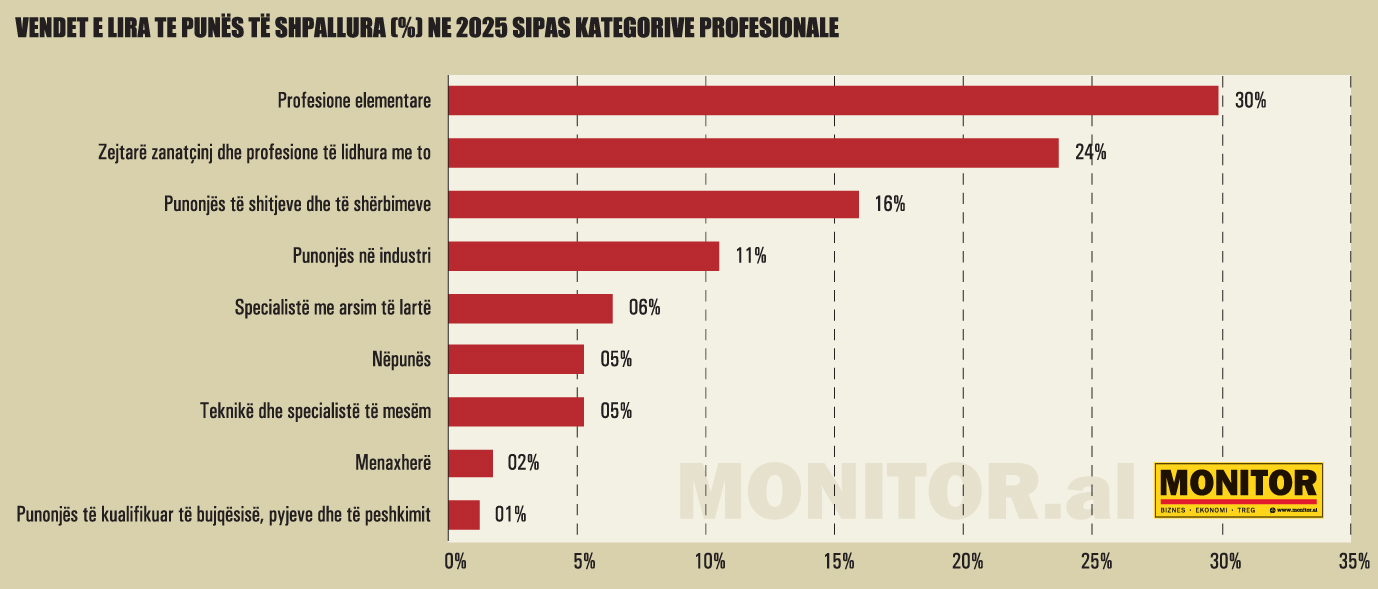
Në aspektin e kategorive profesionale, të dhënat tregojnë se tregu ka pasur nevojën më të madhe për profesionet elementare, të cilat kërkohen në 29,9% të rasteve.
Kjo kategori pasohet nga zanatçinjtë dhe profesionet e lidhura me to që zënë 23,7%, punonjësit e shitjeve dhe shërbimeve me 15,9%, dhe punonjësit në industri, me 10,5%.
Sa u përket profesioneve që kërkojnë nivele më të larta kualifikimi dhe aftësi të specializuara, të dhënat e administruara nga AKPA për vitin 2025 tregojnë një kërkesë më modeste në krahasim me profesionet elementare.
Këto pozicione kërkojnë shpesh arsimim akademik ose trajnime teknike specifike, dhe pesha e tyre në tregun e punës gjatë kësaj periudhe ishte si më poshtë:
Kështu, kategoria “Specialistët me arsim të lartë” përfaqëson vetëm 6,4% të vendeve të lira të shpallura, duke kërkuar individë me formim universitar për role që zakonisht lidhen me analiza, menaxhim projektesh apo detyra të specializuara teknike.
Ky fenomen lidhet me mospërputhjen ndërmjet sistemit arsimor dhe nevojave të tregut të punës. Për shumë studentë, universiteti vazhdon të jetë më shumë një proces teorik sesa një përgatitje e drejtpërdrejtë për tregun e punës.
Po ashtu, investimet e kufizuara në laboratorë, kërkim shkencor, biblioteka dhe infrastrukturë universitare ndikojnë te cilësia e formimit.
Kjo krijon zhgënjim, sepse të rinjtë shpenzojnë vite dhe burime financiare për një diplomë që nuk garanton domosdoshmërisht punësim cilësor.
Për profesorin e universitetit, Ndriçim Mehmeti, diploma po e humbet rolin e saj si një mundësi për integrim ekonomik e social, sepse formimi universitar nuk përputhet me kërkesat e tregut të punës dhe, sipas tij, mungon meritokracia.
“Ajo diplomë vlen më shumë për jashtë vendit sesa për brenda vendit”, shprehet ai, duke argumentuar se mundësitë për punësim në Shqipëri shpesh janë të paracaktuara, ndërsa për të tjerët mbetet emigracioni.
Më tej, ndjenja e zhgënjimit rritet edhe nga perceptimi se emërimet, përfitimet apo mundësitë në institucione nuk bazohen gjithmonë te meritokracia.
Në një intervistë për “Monitor”, z. Mehmeti rendit ndër shkaqet e revoltës së të rinjve mungesën e shpresës dhe të dijeve që duhet të fitojnë gjatë shkollimit, kushtet e mësimdhënies, koston e lartë të jetesës, mungesën e meritokracisë dhe të ardhurat e pamjaftueshme.
Nga përvoja e tij në auditorë, ai thotë se shqetësimet kryesore të studentëve lidhen me të ardhmen, pagat e ulëta, mungesën e kredive të buta dhe të mbështetjes për nisma sipërmarrëse, si dhe me transparencën e investimeve universitare, kërkimin shkencor dhe mungesën e kampuseve në kuptimin e plotë të fjalës.
Sipas tij, mbështetja për sipërmarrjet e reja shpesh u shkon personave të lidhur me qeverinë.
Burimi: INSTAT
Shkolla me më pak nxënës, por me më shumë probleme
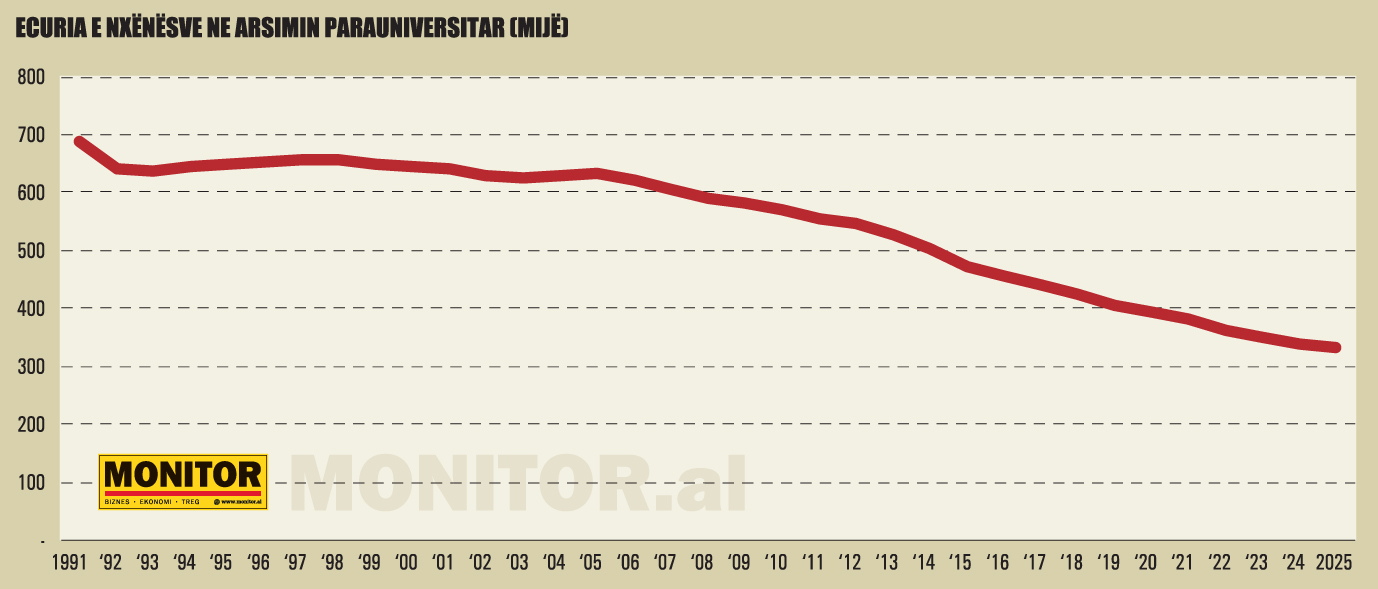
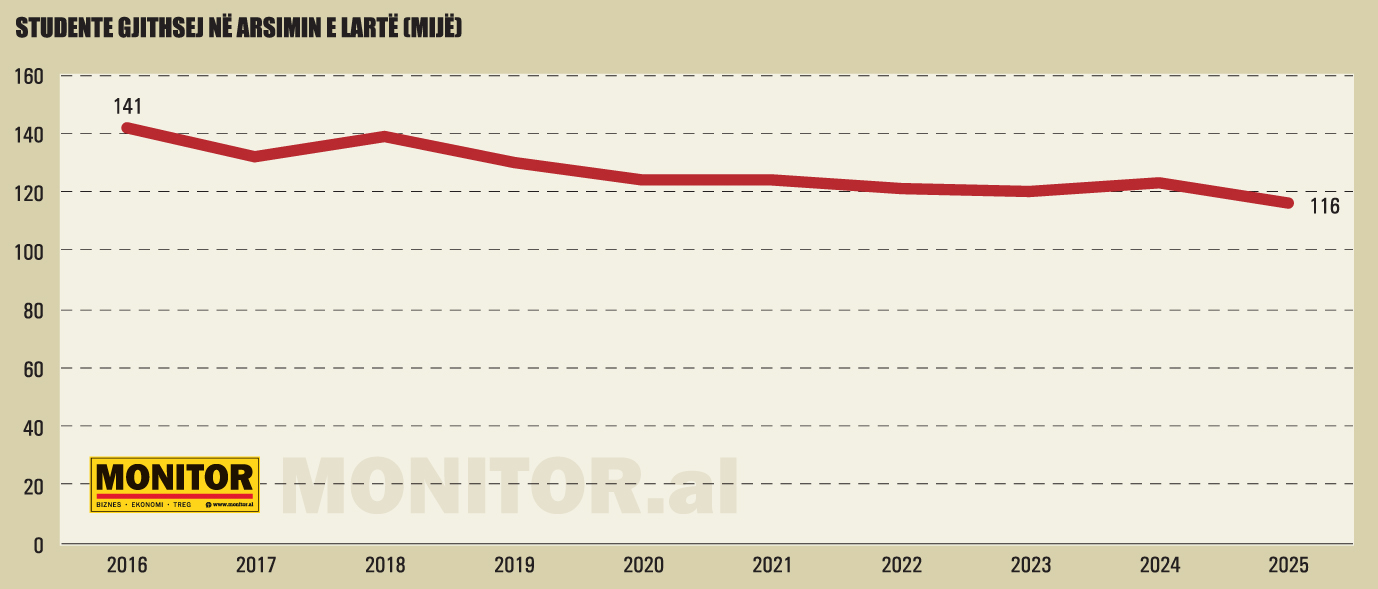
Problemet e arsimit po shoqërohen me një tjetër zhvillim shqetësues, rënien e numrit të studentëve. Sipas INSTAT, në vitin akademik 2025-2026, në institucionet e arsimit të lartë në Shqipëri kishte rreth 115,7 mijë studentë, me një rënie vjetore prej 5,5%.
Në krahasim me një dekadë më parë, kur universitetet kishin rreth 141,4 mijë studentë, numri i tyre është tkurrur me 18%. Rënia më e fortë është regjistruar në universitetet publike.
Por, teksa numri i nxënësve dhe studentëve tkurret dhe fondet mbeten të njëjta ose rriten, cilësia e arritjeve është në rënie. Në testimin ndërkombëtar PISA 2022, Shqipëria regjistroi rënie prej 69 pikësh në matematikë, 47 pikësh në lexim dhe 41 pikësh në shkencë.
Megjithëse rezultatet e PISA 2025 treguan përmirësim, OECD e klasifikoi Shqipërinë në kategorinë e raportimit të kufizuar, për shkak të problemeve me kampionimin dhe përjashtimit të shkollave të vogla rurale, duke kufizuar krahasueshmërinë me vitet e mëparshme.
Të dhënat nxjerrin në pah përmasat e analfabetizmit funksional, teksa mbi 60% e 15-vjeçarëve nuk arrijnë nivelin minimal të kompetencave në lexim dhe zgjidhjen e problemeve.
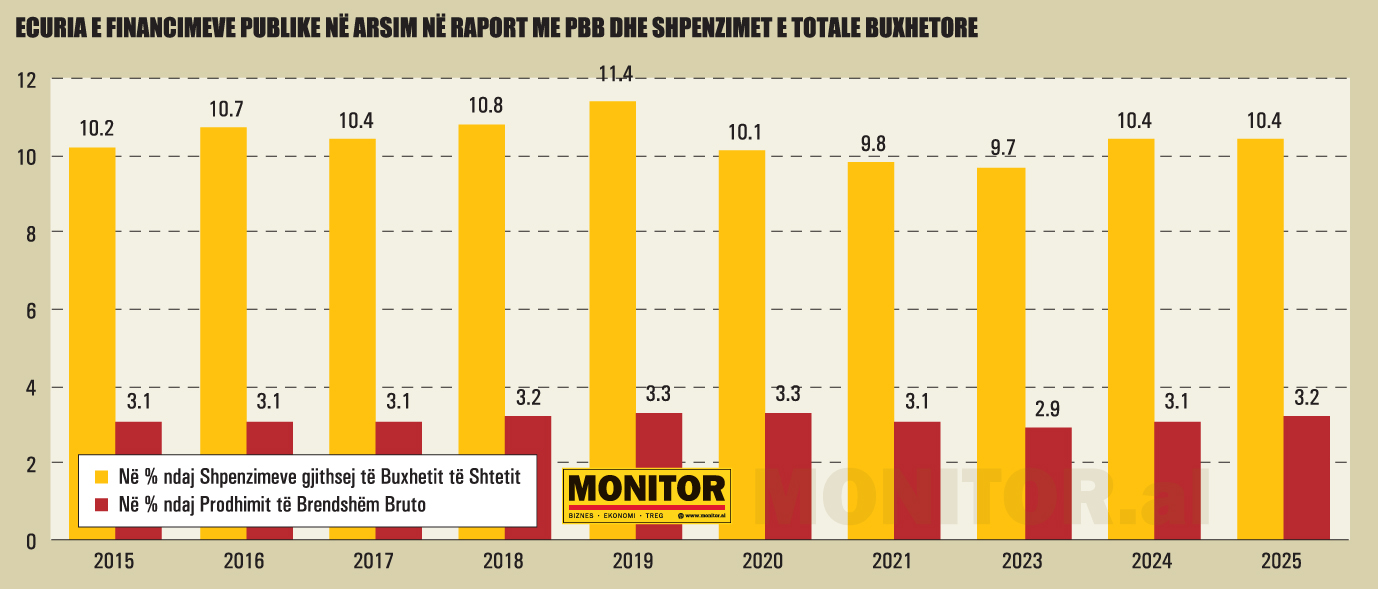
Financimi i ulët mbetet një nga pengesat kryesore për përmirësimin e sistemit. Shpenzimet publike për arsimin gjatë dekadës luhaten në rreth 2,3-3% të Prodhimit të Brendshëm Bruto (PBB), dukshëm më poshtë se mesatarja prej rreth 4,5% e Bashkimit Europian dhe objektivi i premtuar prej 5% nga qeveria Rama.
Mungesa e fondeve reflektohet edhe në kushtet e mësimdhënies, ku mbi 80% e shkollave publike nuk disponojnë laboratorë shkencorë apo infrastrukturën e nevojshme digjitale.
Z. Mehmeti kritikon qeverinë për mungesën e ndryshimeve thelbësore në arsim gjatë 13 viteve të fundit.
Sipas tij, nuk është bërë sa duhet për buxhetin, kushtet e mësimdhënies, përfshirjen e studentëve në jetën universitare, bibliotekat dhe mësimin digjital. Ai sjell në vëmendje edhe moszbatimin, sipas vlerësimit të tij, të planit me tetë pika të njohur si “Pakti për Universitetin”, të cilin e konsideron një thyerje të besimit të studentëve dhe të shoqërisë.
Profesori kërkon ndërhyrje rrënjësore nga qeveria, megjithëse shprehet skeptik për gatishmërinë e saj për të ndryshuar situatën.
Gjatë pesë viteve të fundit janë mbyllur mbi 150 shkolla, ndërsa numri i nxënësve ka rënë me më shumë se 25% brenda një dekade. Fenomeni është veçanërisht i dukshëm në zonat rurale, ku pakësimi i nxënësve ka sjellë shtimin e klasave kolektive dhe ka thelluar pabarazitë në aksesin ndaj arsimit cilësor.
Ndërkohë pozita profesionale e mësuesve është dobësuar si pasojë e pagave që mbeten prapa standardeve rajonale dhe mundësive të kufizuara për trajnim e zhvillim profesional.
Nga ana tjetër, mospërputhja mes programeve arsimore dhe kërkesave të ekonomisë po krijon një paradoks në tregun e punës: papunësia te të rinjtë me arsim të lartë tejkalon 20%, ndërsa bizneset raportojnë vështirësi në gjetjen e punonjësve të kualifikuar.
Problemet shtrihen edhe në arsimin e lartë, ku universitetet shqiptare vijojnë të kenë pozicione të ulëta në renditjet ndërkombëtare. Financimi për kërkimin shkencor, në më pak se 0,1% të PBB-së, kufizon kapacitetet për inovacion dhe zhvillim akademik.
Politizimi i emërimeve dhe diferencat e thella mes zonave urbane dhe rurale e rëndojnë më tej situatën, duke kufizuar mundësitë për arsimim cilësor dhe duke e kthyer arsimin në një nga sfidat më të mëdha afatgjata të zhvillimit ekonomik e social të vendit.
Për të dalë nga kjo gjendje, profesor Mehmeti propozon një pakt kombëtar për arsimin dhe rininë, që të përfshijë zërin dhe kërkesat e të rinjve.
Ai kërkon rritje të konsiderueshme të buxhetit për arsimin, pjesëmarrje aktive të studentëve në vendimmarrje, praktika profesionale të paguara me mbështetjen e shtetit brenda dhe jashtë vendit, si dhe më shumë mundësi mobiliteti me universitetet e njohura ndërkombëtare.
Sipas tij, këto masa duhet të përfshihen në një dokument afatgjatë që të mos ndryshojë me çdo ministër apo qeveri të re.
Burimi: INSTAT
Një brez më i vogël me një barrë më të madhe ekonomike
Plakja e popullsisë dhe tkurrja e brezave të rinj po shtojnë sfidat për qëndrueshmërinë e sistemit të pensioneve në Shqipëri. Të dhënat e Institutit të Sigurimeve Shoqërore (ISSH) tregojnë se në vitin 2025 kishte vetëm 1,18 kontribuues për çdo pensionist, ndërsa numri i pensioneve po rritet me ritme më të shpejta se ai i kontribuuesve.
Në perspektivën afatgjatë, një numër gjithnjë e më i vogël të rinjsh që hyjnë në tregun e punës rrezikon të përballet me një barrë më të madhe për financimin e sistemit.
Teksa numri i të rinjve po pakësohet, si pasojë e rënies së lindshmërisë dhe emigracionit, nevoja për financimin e pensioneve dhe shërbimeve sociale për një popullsi në plakje pritet të rritet.
Të dhënat e Institutit të Sigurimeve Shoqërore (ISSH) tregojnë se në vitin 2025, numri mesatar i kontribuuesve në skemën e sigurimeve shoqërore arriti në 870.964 persona, me një rritje prej 3,2% krahasuar me vitin e mëparshëm.
Nga ana tjetër, numri i pensioneve në pagesë në fund të vitit arriti në 754.981, duke u rritur me 4,7% në krahasim me vitin 2024.
Numri i pensioneve po rritet me ritme më të shpejta se numri i personave që kontribuojnë për financimin e sistemit. Sipas ISSH-së, raporti mes kontribuuesve dhe pensionistëve ishte vetëm 1,18 në vitin 2025.
Ky tregues ka mbetur pothuajse i pandryshuar gjatë pesë viteve të fundit, duke reflektuar vështirësinë për të zgjeruar bazën e financimit në raport me numrin e përfituesve.
Situata është edhe më shqetësuese në perspektivën afatgjatë, duke pasur parasysh ndryshimet në strukturën moshore të popullsisë dhe hyrjen e brezave numerikisht më të vegjël në tregun e punës. Presioni mbi skemën reflektohet edhe në treguesit financiarë.
Në një ekonomi ku informaliteti vazhdon të kufizojë bazën e kontribuuesve, plakja e popullsisë mund ta bëjë edhe më të vështirë ruajtjen e ekuilibrave financiarë.
Sfida bëhet veçanërisht e rëndësishme për brezat e rinj, të cilët duhet të përballojnë njëkohësisht kostot e larta të strehimit, shpenzimet për krijimin e familjes dhe kontributet e nevojshme për financimin e sistemit të mbrojtjes sociale.
Nëse numri i personave në moshë pune vijon të tkurret, ndërsa numri i pensionistëve rritet, ruajtja e qëndrueshmërisë së sistemit do të kërkojë rritje të punësimit formal, të produktivitetit dhe të të ardhurave nga kontributet, ose mbështetje më të madhe nga buxheti i shtetit.
Këto zhvillime nxjerrin në pah nevojën për politika që sigurojnë një shpërndarje të qëndrueshme të barrës ekonomike.
Në të kundërt, ekziston rreziku që brezat e rinj ta perceptojnë sistemin si një mekanizëm ku detyrimet e tyre financiare po rriten, ndërsa siguria për përfitimet që do të marrin në të ardhmen mbetet e pasigurt.
Burimi: INSTAT
Brezi, i zhgënjyer nga korrupsioni i lartë dhe keqqeverisja
Sipas të dhënave të “Barometrit të Ballkanit”, Shqipëria renditet me nivelin më të lartë të perceptimit të korrupsionit në rajon, ku mbi 70% e qytetarëve e shohin atë si kërcënimin kryesor për të ardhmen. Raportet kombëtare për rininë tregojnë se më shumë se 80% e të rinjve shqiptarë e konsiderojnë kapjen e shtetit dhe korrupsionin si shkakun kryesor pse dëshirojnë të emigrojnë.
Ky skepticizëm thellohet nga mungesa e meritokracisë në tregun e punës, ku mbi 65% e brezit të ri besojnë se punësimi në administratën publike varet nga nepotizmi dhe militantizmi partiak, jo nga arsimimi. Besimi te sistemi politik është shkatërruar nga aferat e mëdha korruptive që përfshijnë zyrtarë të lartë shtetërorë.
Hetimet e posaçme nga SPAK kanë marrë të pandehur ish-zëvendëskryeministren dhe ministren e Infrastrukturës Belinda Balluku, e cila akuzohet për manipulimin e procedurave të prokurimit publik me vlerë qindra miliona euro, përfshirë ato të Tunelit të Llogorasë dhe loteve të Unazës së Madhe të Tiranës, si dhe për hetime mbi pasuri të fshehura e sekuestrimin e vilave luksoze.
Vendimi i shumicës parlamentare për të bllokuar heqjen e imunitetit dhe për të refuzuar autorizimin e kërkuar nga SPAK për arrestimin e saj shkaktoi revoltë të madhe publike.
Kjo mbrojtje politike nga Kuvendi u pa si një goditje e drejtpërdrejtë ndaj barazisë para ligjit, duke nxitur protesta të të rinjve dhe organizatave rinore që e konsideruan zvarritjen e drejtësisë si një provë se sistemi mbron të fortët. Më herët, hetimet e posaçme nga SPAK kanë zbuluar skandale miliona eurosh, si ai i “inceneratorëve”, ku ish-ministra u akuzuan për marrje ryshfeti dhe pastrim parash.
Një tjetër goditje për besimin publik ishte çështja e “koncesioneve në shëndetësi” (sterilizimi dhe check-up), që çoi në hetimin e një serie zyrtarësh të lartë të administratës dhe ish-ministrash. Po ashtu, skandali i dosjes “‘5D’ në Bashkinë e Tiranës”, ku drejtorë të rëndësishëm lokalë përfitonin tenderat e vetë institucionit përmes kompanive private në pronësi të tyre, tregoi se si korrupsioni është strukturuar në nivelet më të larta vendimmarrëse.
Raportet e Freedom House e klasifikojnë Shqipërinë si një regjim hibrid, ku zbatimi i ligjit mbetet i diferencuar dhe i pabarabartë. Shërbimet publike si arsimi dhe shëndetësia vuajnë nga shpërdorimi i fondeve, duke i detyruar të rinjtë të përballen me kosto të larta pa marrë cilësi.
Pamundësia për të garuar me meritë në tenderat apo konkurset publike ka demoralizuar rininë e kualifikuar profesionale. Edhe pse reforma në drejtësi ka nisur të godasë figurat kryesore politike, ngadalësia e proceseve gjyqësore ushqen idenë se elita politike gëzon sërish mbrojtje.
Zgjedhjet politike shpesh perceptohen nga brezi i ri si procese të manipuluara nga përdorimi i burimeve shtetërore dhe blerja e votës. Pjesëmarrja e të rinjve në votime ka arritur në nivele minimale historike, si pasojë e kësaj mungese të besimit.
Transparenca e ulët në përdorimin e taksave dhe mbyllja e institucioneve ndaj auditimit publik e bën kontrollin qytetar pothuajse të pamundur. Përballë këtij realiteti, zgjidhja kryesore e të rinjve ka qenë largimi masiv përmes emigrimit drejt vendeve të Bashkimit Europian.
E gjithë kjo pasqyrë dëshmon se pa sekuestrimin e pasurive të paligjshme dhe pa rikthimin real të meritokracisë, rinia shqiptare do të vijojë ta shohë sistemin politik si një pengesë për të ardhmen e saj.
Burimi: INSTAT
Emigrimi, reagimi i heshtur kundër sistemit
Potenciali i emigrimit mes të rinjve vazhdon të mbetet një nga sfidat më me peshë demografike dhe ekonomike për të ardhmen e Shqipërisë, duke u shfaqur si një formë e heshtur rebelimi ndaj mungesës së perspektivës.
Të dhënat më të fundit që i takojnë vitit 2025 nga “Barometri i Ballkanit” tregojnë se rreth “44% e shqiptarëve” shprehin dëshirën për të emigruar, përqindja më e lartë në të gjithë rajonin.
Kjo prirje bëhet edhe më agresive te moshat e reja, ku sipas studimeve të mëparshme të profesorëve Ilir Gëdeshi dhe Russell King, “rreth 79% e studentëve” synojnë të largohen nga vendi.
Prirja përkeqësohet, pasi mbi “95% e studentëve” që kryejnë arsimin në universitetet perëndimore deklarojnë se nuk kanë më plan të kthehen, duke e vendosur Shqipërinë ndër vendet më të prekura nga rrjedhja e trurit (*brain drain*).
Anketat kanë gjetur se në bazë të këtij fenomeni qëndrojnë kryesisht pagat e ulëta, pasiguria në tregun e punës, mungesa e meritokracisë dhe zhvlerësimi i diplomës universitare në tregun vendas.
Përveç anës financiare, të rinjtë ushqejnë pakënaqësi të thellë ndaj cilësisë së arsimit, shërbimeve publike dhe perspektivës për një jetesë me dinjitet. Kjo ikje masive po përshpejton plakjen demografike dhe po krijon boshllëqe kritike në sektorë kyç si mjekësia, inxhinieria dhe TIK-u.
Për përballimin e kësaj situate, ekspertët nënvizojnë nevojën urgjente për reforma reale mbështetëse, rritje dinjitoze të pagave dhe integrim të standardeve të BE-së, si të vetmet rrugë për të zbutur këtë trend shkatërrues për kapitalin njerëzor të vendit.
Burimi: INSTAT
The post Arsyet në sfond të rebelimit appeared first on Revista Monitor.



 MSc Roland Tashi, ekspert i çështjeve të sigurisë