Poland's Foreign Minister Radoslaw Sikorski threatened that Warsaw may reconsider its annual payment of $50 million for Elon Musk's Starlink network, due to new roaming restrictions that will affect Polish users at the end of this month.
"Elon, stop discriminating against Polish Starlink users, otherwise we may reconsider paying $50 million per year for your services," Sikorski wrote on X.
The Foreign Minister's anger came after Starlink's decision to exclude Poland from the common European roaming area, which includes more than 30 countries, including Germany, the Czech Republic, Slovakia and Lithuania.
Users within this area can transport their terminals across borders without activating restrictions for international use. However, Polish users will now face additional restrictions when traveling.
Polish Minister for Digital Affairs, Krzysztof Gawkowski, also criticized Musk, accusing Starlink's parent company, SpaceX, of treating Poles as second-rate users and demanding explanations for the regulatory basis for this change.
"Poland is not a second-hand market. Polish users are not second-hand users," Gawkowski wrote on X.
The new rules apply to new users who register with Starlink from July 14, 2026, while from August 17 they will also apply to existing Polish users.
This is not the first time Sikorski and Musk have clashed over the Starlink issue. Last year, Musk told the Polish minister to "shut up" after Sikorski warned that Warsaw could seek alternative providers of the satellite services Poland funds for Ukraine. /Telegraph/
Ukraine has proposed to Russia a moratorium on attacks on civilian targets in the Black Sea.
The proposal has been conveyed to Moscow through intermediaries, but Russia has not yet responded.
According to Ukrainian authorities, Russian forces attacked at least 50 merchant ships in June and July. More than 30 civilians were killed. The attacks targeted ships carrying grain from Ukrainian ports.
One of the deadliest incidents was the attack on the Golden Leo in July. A Russian missile struck the ship shortly after it left port. Ten people were killed, including a Ukrainian pilot. A week later, the ship sank.
Russia is using new high-precision weapons that make slow-moving cargo ships easy targets. According to Ukrainian port officials, this appears to be a systematic hunt for civilian ships.
Millions of tons of Ukrainian grain are at risk. The port of Odessa and two neighboring ports account for about 60 percent of Ukraine's export revenue, which amounts to approximately $3.5 billion per month.
Skynews notes that the attacks could disrupt global supplies of wheat, corn and barley. Ukraine, for its part, is attacking ships belonging to Russia's so-called "shadow fleet." /Telegraph/
A large forest fire broke out on Thursday afternoon in the tourist region of Halkidiki, in northern Greece, forcing authorities to mobilize large firefighting forces and begin the evacuation of residents and tourists.
There are 142 firefighters and 51 vehicles on the ground, supported by nine aircraft and seven helicopters.
The fire is spreading in a forest area about 90 kilometers south of Thessaloniki, with flames in the dense pine forest reaching up to 20-30 meters high.
Authorities have issued three evacuation orders for the tourist-heavy areas of Siviri and Fourka. At Fourka beach, dozens of holidaymakers were evacuated by sea, while 15 small boats were mobilized to transport them. Smoke has blanketed the sky above the tourist area.
According to Greek public broadcaster ERT, the fire front is about three kilometers long and is moving towards the sea. Strong winds are favoring the spread of the flames, which have approached residential areas. The evacuation has included about 70 percent of the residents and visitors of the affected area.
Greek authorities have declared the highest level of alert for the risk of wildfires in several regions, including Halkidiki. Traffic has been banned in forest areas of Halkidiki, while emergency teams continue their efforts to bring the fire under control.
The risk remains very high on Friday, when winds of up to 100 kilometers per hour are forecast. Authorities have urged residents and tourists to respect evacuation orders and civil protection instructions. /Telegraph/
British taxpayers subsidized “healing therapy” for IDF soldiers after their service in Gaza, a Declassified investigation reveals.
British taxpayers have funded "healing therapy" for Israeli soldiers fighting in Gaza, Declassified reveals.
An Israeli organization has received an undisclosed amount through a British charity, while the British government has added 25 percent through the Gift Aid scheme.
Emails obtained by Declassified show that the Yahalom Foundation, an Israeli veterans' organization, asks British supporters to channel donations through its "UK-registered partner platform."
"Processing your donation through them ensures you receive full tax recognition and activates Gift Aid, maximizing the impact of your contribution," the email states.
"100 percent of your gift goes directly to Yahalom to support our core mission," the Telegraph reports.
The Yahalom Foundation directs British donors to a list of fundraising projects in support of Israel Defense Forces (IDF) veterans and claims that donations may benefit from tax subsidies.
The list includes £5,000 funding for a “therapeutic healing journey” for soldiers returning from Gaza, as well as “individual psychological treatments”.
The foundation is also raising £100,000 for a memorial hall in honour of slain Israeli soldiers.
Other data from two years ago shows that British donations were used to fund equipment for serving Israeli soldiers, although it is not clear whether Gift Aid was added to these donations.
Treatment for PTSD
In response to the investigation, UK Toremet confirmed that it had given money to the Yahalom Foundation for “providing PTSD treatment to the association’s beneficiaries.”
UK Toremet stated that monitoring of the grant had confirmed that the funds were used exclusively for the intended purpose and argued that providing mental health treatment to an individual constitutes social and medical assistance and is a charitable act under English law.
However, UK Toremet denied describing itself as a “partner platform” of the Yahalom Foundation, saying that this description “is not accurate.” The organization said it would contact the Yahalom Foundation regarding this wording.
Meanwhile, UK Toremet's claims contradict those of the Yahalom Foundation, which says that "100 percent" of donations are sent directly to Yahalom to support its core mission.
Britain's Charity Commission announced a week ago that it had launched an investigation into eight British charities operating in Israeli settlements in the West Bank. The regulator said it would examine whether the funds were being used in accordance with charitable purposes.
Meanwhile, HMRC, the body responsible for Gift Aid, declined to comment, saying confidentiality rules do not allow it to discuss the tax affairs of charities. The Yahalom Foundation did not respond to Declassified's request for comment. /Telegraph/
The Pentagon has announced in a report submitted to Congress that US strikes in Yemen last year killed 153 civilians and injured 243 others, US media report.
According to an internal US Department of Defense report, the 12-page document was sent to the US Senate Armed Services Committee on Monday.
It said some of the attacks "most likely" caused civilian casualties, including the attack on Sanaa on April 6, which killed five civilians and injured 25 others.
The report also singles out the US attack on Hodeidah on April 17, which, according to the Pentagon, killed at least 80 civilians. Human Rights Watch said in a report published in June that the attack should be investigated as a possible war crime, AP reports.
The organization's researcher for Yemen and Bahrain, Niku Jafarnia, said that the US government's decision to attack the port of Ras Issa, a key point for aid entry into Yemen, at a time when hundreds of workers were there, shows a callous disregard for civilian lives.
US President Donald Trump ordered airstrikes on the Houthi rebels in March 2025 after the group attacked ships in the Red Sea, claiming it was in solidarity with Palestinians in the besieged Gaza Strip. In late April, a US airstrike in the northwestern province of Saada also killed at least 68 African migrants.
The Pentagon said 15 other incidents related to these airstrikes were still under review. More than 1,000 US strikes failed to permanently stop the Houthis, and the campaign was suspended in May 2025, ahead of Trump's visit to the Persian Gulf.
According to Middle East Eye, Saudi Arabia had asked Washington to stop the attacks before this visit, while regional officials assessed that the impact of the attacks on the Houthi military arsenal was severe but short-lived. /Telegraph
Romania has temporarily shut down its Cernavoda nuclear power plant due to falling water levels in the Danube River, causing concerns about the country's electricity supply.
This is the first time in 23 years that the plant has faced such a shutdown. The water level in the Danube has dropped to such an extent that there is no longer enough water to properly cool the reactors.
The Cernavoda power plant uses Danube water in its cooling system, while high temperatures and drought have significantly reduced the river's flow.
To compensate for the lack of domestic production, Romania has started importing electricity from Ukraine, media reports.
Authorities are monitoring the situation and the level of the Danube, while the full restoration of the plant's production will depend on hydrological conditions and the possibility of guaranteeing safe cooling of the reactors.
The situation once again highlights the impact of droughts and high temperatures on energy infrastructure, especially in power plants that depend on water sources for cooling systems. /Telegraph/
An explosion in the port of Rotterdam in the Netherlands has killed one person and injured several others, a Rotterdam police spokesman said. The cause of the explosion is still unknown and is under investigation.
Police said the explosion occurred on Moezelweg Street at around 11:30 a.m. and that the scene has been cordoned off.
Meanwhile, the company Gunvor Energy, which manages oil storage tanks in the same area, reported a separate incident during maintenance work, where several people were injured on Thursday morning.
Local media also reported several power outages in the port of Rotterdam, Reuters writes.
Security services and police are investigating whether there is any connection between the power outages and the explosion.
The Port of Rotterdam is the largest port in Europe and includes an oil refinery and several petrochemical facilities. /Telegraph/
Israeli Defense Minister Israel Katz has stated that Israel does not plan to withdraw from areas it considers "safe zones" in Lebanon, Syria and Gaza.
"We will not withdraw - neither from Lebanon, nor from Syria, nor from Gaza - from the security zones. This is our policy and we will continue it," he said.
Katz described the presence of Israeli forces as part of the country's security strategy, emphasizing that the army must remain in the territories across the border to prevent threats to Israel.
"We are up here, they are down there. The residents are outside, the soldiers are inside, and the houses have been destroyed," the Israeli minister declared.
He has previously reiterated that Israel intends to keep troops in the security zones in Lebanon, Syria and Gaza, arguing that they are necessary for the protection of Israeli borders and communities.
The statement comes at a time of ongoing tensions in the region and while the issue of the Israeli military presence in these territories remains one of the main points of conflict with regional and international actors. /Telegraph/
An Air India pilot who was flying a flight from Phuket to Delhi that suffered a sudden loss of altitude was also reportedly taking medication for sleep problems, according to an internal company safety report.
The pilot had tested positive for marijuana in two previous drug tests. In his flight safety statement, he said he had been having trouble sleeping due to personal circumstances and that his family doctor had prescribed medication for the problem.
The incident occurred on August 4, when the Airbus A320neo aircraft, with 137 passengers and eight crew members, was flying from Phuket to Delhi.
The plane suddenly lost about 300 feet of altitude, injuring at least 20 passengers and four crew members. The plane then landed safely in Delhi.
According to the report, the pilot was not in his seat when the plane lost altitude and the co-pilot was in command. After the incident, the pilot went to the passenger cabin to check on the injured.
Sources quoted by NDTV also said that, after landing in Delhi, the pilot was unsteady on his feet and needed help to sit down. He was also helped by an investigator while submitting his urine sample for testing.
The pilot stated that he had difficulty sleeping during his stay in Phuket and that the flight schedule had limited his time for rest. Both pilots have been temporarily removed from duty, pending the completion of the investigation. /Telegraph/
US President Donald Trump declared that the United States has established complete control over the strategic Strait of Hormuz and hinted that Washington intends to maintain this control.
In a statement, Trump described the US naval blockade as "a wall of steel", claiming that Iran does not have the capacity to challenge it.
Trump said that Iran no longer has a functioning navy and air force, while claiming that the remaining military forces are not being paid and that the Islamic Revolutionary Guard Corps (IRGC) has been severely weakened.
He also described the Iranian leadership as unreliable and said the country is facing a severe cash shortage and a badly hit economy.
According to Trump, Iran is now "all talk and no action," adding that the country no longer poses the threat it once did in the Middle East.
"Iran only talks and no longer acts; it is no longer the Middle East's bully. Glory be to Allah!" said the 80-year-old.
Trump's statements come at a time of high tensions over the Strait of Hormuz, one of the world's most important oil shipping lanes. Controlling or blocking it could have major consequences for global energy markets. /Telegraph/
Ukrainian forces have liberated 745 square kilometers of territory occupied by Russia along part of the southeastern front this year, President Volodymyr Zelensky said today, praising the operation, which he said was going "exactly according to plan."
The Ukrainian military has in recent months tried to increase pressure on Moscow, launching counteroffensives on parts of the 1,200-kilometer-long front, as well as striking at logistical and energy infrastructure.
Zelensky said 26 settlements in the Dnipropetrovsk, Donetsk and Zaporizhzhia regions have returned to Kiev's control. They are located along a segment of the front about 60 kilometers long, where the borders of these three regions meet.
"Our offensive operation was carried out precisely - exactly according to plan," Zelensky wrote on the social network X, praising the Ukrainian airborne forces and other units.
According to the map of the Ukrainian group DeepState's front, a large part of this territory remains a gray area, not fully controlled by either side. Another part is still marked as territory under Russian control.
A video released today by the Ukrainian military's General Staff shows mostly drone footage of Ukrainian soldiers raising the Ukrainian flag in liberated settlements. Reuters has not been able to independently verify the authenticity of the footage.
Analysts say the advance of Russian forces on the front has slowed this year along most of the battlefront, although Russian troops continue to approach key cities in the eastern Donetsk region.
Moscow has demanded that Kiev give up the remaining part of the Donetsk industrial region, a demand that Ukraine is unwilling to accept. /Telegraph
Ukrainian drones have struck Novorossiysk, one of Russia's largest ports on the Black Sea and a strategic point for oil exports, maritime trade and Russian military activity.
The recent attack on the city and port infrastructure has caused damage and temporarily disrupted activity at several terminals.
The attack lasted more than five hours and activated Russian air defense systems. According to reports, damage was caused to several buildings, while a bread processing factory was also hit. Novorossiysk is particularly important for Russia, as it is also home to facilities related to the Black Sea Fleet and major export terminals.
In a separate development, Ukraine has suspended drone attacks on oil tankers using the port of Novorossiysk, following a direct request from US Vice President JD Vance to Ukrainian President Volodymyr Zelensky.
The American request was specifically related to ships transporting Kazakh oil through the Caspian Pipeline Consortium (CPC) terminal.
Washington had expressed concern that attacks on these ships could cause disruptions in global oil markets.
The US also feared that the strikes would harm the interests of American companies, including Chevron and ExxonMobil, which have interests in infrastructure related to Kazakh oil transportation.
According to reports, Ukraine has agreed not to strike CPC infrastructure or non-Russian ships, as long as they are not under Ukrainian sanctions and are not transporting Russian oil or cargo.
This agreement shows that Ukrainian attacks on Russian energy infrastructure are starting to have consequences beyond the front, drawing direct concern from Washington.
However, Novorossiysk remains one of the most important strategic targets for Ukraine. Strikes on the port are aimed at limiting Russia's military and logistical capabilities, while also affecting one of the main routes for energy exports from the region. /Telegraph/
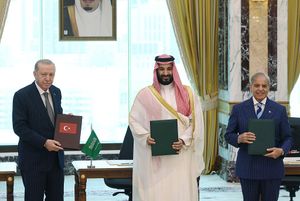
Saudi Arabia opposed Egypt's inclusion in the security agreement signed last week by Turkey and Pakistan, despite Ankara's efforts to include Cairo.
According to "Middle East Eye", Riyadh's stance is related to dissatisfaction with the government of President Abdel Fattah el-Sisi and the assessment that Egypt has lost part of its strategic and military importance.
The agreement stipulates that an armed attack on any of the three countries is considered an attack on all. Saudi Arabia has presented it as a mechanism for strengthening mutual defense, although it does not clearly define the manner of response or military assistance in the event of a crisis.
Tensions between Riyadh and Cairo are old. Saudi Arabia was one of Sisi's main financial backers after he took power in 2013, providing billions of dollars to the Egyptian economy.
However, Riyadh is increasingly dissatisfied with what it considers a lack of reciprocal support from Egypt on security issues, particularly in the fight against Houthi rebels in Yemen.
Saudi discontent has also been heightened by Cairo's proximity to the United Arab Emirates. According to the Middle East Eye, Egypt has helped the Emirates with air defense systems and fighter jets, while Sisi has maintained frequent contacts with the Emirati president, Mohammed bin Zayed, during the conflict with Iran.
Turkey, on the other hand, has expressed a desire for Egypt to join in the future. Turkish Foreign Minister Hakan Fidan called Cairo a “natural partner” for Ankara, while Turkish officials said that considerable efforts had been made to include Egypt. However, the participating countries decided to proceed without it.
Saudi officials believe that Turkey and Pakistan can offer greater military capabilities, thanks to the Turkish defense industry and the powerful Pakistani army. However, the door for Egypt is not considered closed forever. Its membership could be considered in the future, if relations improve and Cairo proves to be a more reliable partner. /Telegraph/
Seven workers in Panna, a region known for diamonds in central India, have found a rare diamond weighing 17.96 carats.
The initial value of the stone is estimated at at least five million Indian rupees, around 88,800 Bosnian marks, writes the BBC .
The diamond was found on a plot of land in Sarokha village, which the workers had rented about two years ago.
Officials have described the stone as a "gemstone quality" diamond, and it is expected to be sold at the quarterly diamond auction in the first half of October.
The workers had been working for two years without finding any valuable stones. After a break of about a year, they returned to check the old plot after heavy rainfall and found the diamond right on the surface of the ground.
"We had been working there for two years, but we had no luck. When we returned after the rains, we found it on the surface," said Akhilesh Pal, one of the workers who participated in the discovery.
Panna is one of India's most famous diamond mining areas, but residents face poverty, unemployment and a lack of economic opportunities. For this reason, many of them turn to diamond prospecting in the hope of changing their lives.
In this case, the seven workers will directly benefit from the sale of the diamond. For three of them, the proceeds could mean a special opportunity: they have shown that they were so poor that they could not afford to get married. Now they hope to secure money for marriage, a family and a new start in life. /Telegraph/
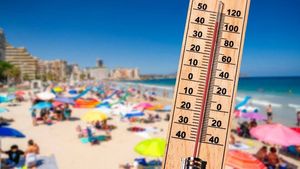
This year's record heat has left about 38 percent of Europe in drought.
Overuse of water, mismanagement of water resources and pollution of lakes and rivers have further exacerbated water stress on the continent. In the face of this situation, the European Union is treating water scarcity as one of the greatest environmental emergencies.
According to the European Environment Agency's (EEA) Water Use Index Plus (WEI+), a region is considered under water stress when it uses 20 percent of its renewable freshwater resources. When this figure reaches 40 percent, stress is considered severe.
According to the European Commission, around 30 percent of Europe's population and 20 percent of the continent's territory face water shortages every year, euronews writes.
The high temperatures of these days are worsening the water crisis in Europe, as the heat wave is drying out the land and significantly reducing river flows.
Behind this situation lies a water system that has been under great pressure for years. Decades of pollution, overexploitation and mismanagement of water resources have damaged rivers, lakes and freshwater reserves, leaving the European Union with increasingly less capacity to respond to the current water crisis.
The European Union presented the Water Scarcity Strategy in June 2025, with the aim of making Europe more resilient and better prepared to face the water crisis. The strategy aims to protect the water cycle, promote a more water-efficient economy, and ensure access to clean and affordable water.
“Water is no longer just an investment in the environment. It is an investment in people's well-being, Europe's food security, public health, economic competitiveness and sustainability. If Europe underinvests in water today, the consequences will not be felt first by institutions, but by ordinary people,” said Thomas Bajada, MEP from the Progressive Alliance of Socialists and Democrats (S&D) and rapporteur for the Water Scarcity Strategy in the European Parliament.
Why are Europe's water resources dwindling?
"Water stress" in Europe is the result of a number of factors, one of which is the heavy dependence on water for agriculture, industry and energy production. This has led to the overexploitation of water resources and increased pressure on natural reserves.
The European Environment Agency (EEA) reports that total water abstraction in the European Union has decreased by 14 percent between 2000 and 2023. However, the amount of water used remains high and, in many areas, exceeds natural renewal rates. As a result, river flows and groundwater reserves have decreased, leaving less and less water available for the system.
Pressure is also being added by emerging water-intensive industries, particularly semiconductor manufacturing and data centers. These activities are further increasing demand for water at a time when resources are already under pressure.
One way to reduce dependence on natural resources is to reuse wastewater. However, Europe currently recycles only about 2.4 percent of it, leaving a huge untapped potential for saving and managing water more efficiently.
The problem is compounded by losses in public supply networks. Around 23 percent of treated water in Europe is lost due to poor management and outdated infrastructure, significantly reducing the amount of water that reaches consumers.
"Across the European Union, we are still losing large amounts of treated drinking water through outdated pipelines before it reaches people's taps," Bajada warned.
The EurEau report for 2026 shows a slight decrease in water losses in Europe, to around 23.5 percent, compared to 24 percent in the 2021 survey. However, member states continue to invest less than necessary in the maintenance and modernization of water supply infrastructure.
Germany leads the way in investments, with around €9 billion per year, followed by France with €6.5 billion, while Slovenia invests only around €100 million. According to the European Parliamentary Research Service (EPRS), increased urbanization and migration are expected to increase water demand, particularly in Northern and Western Europe, making the modernization and expansion of water infrastructure even more necessary.
Meanwhile, climate change is accelerating the deterioration of the situation. Temperatures in Europe are rising by about 0.56 degrees Celsius per decade, more than double the global average rate of 0.27 degrees Celsius, according to data from Copernicus, the European Union's Earth observation program.
Drought is spreading across Europe, affecting more and more land, forests and agricultural areas. In 2024 alone, drought affected an estimated 601,193 square kilometres of land, 33,518 square kilometres of forests and 87,567 square kilometres of agricultural land. According to the European Environment Agency (EEA), droughts are expected to intensify further by 2050, also increasing the rate of water evaporation.
As water supplies dwindle, pollution is putting pressure on remaining resources, reducing the amount of clean, usable water. The EEA warns that climate change could affect groundwater quality through the interaction between pollution and overuse.
"Groundwater quality can be affected by climate change through the interaction between pollution and overexploitation. For example, if an aquifer is exploited beyond its capacity, the concentration of nutrients and chemicals can increase, as pollutants will be less diluted," the EEA told Euronews.
Water Scarcity Strategy
"The Water Scarcity Strategy changes one very important thing: the way we think about water," Bajada said.
The strategy aims to guarantee Europe's long-term water supply through more than 50 concrete measures. According to the platform monitoring their implementation, only three measures have been completed so far.
The strategy focuses on reducing excessive water use and preventing land degradation, aiming to protect the quantity and quality of water throughout its entire cycle. In this context, the concept of “sponge infrastructure” aims to restore the natural ability of ecosystems to absorb, store, filter and gradually release water, while contributing to the protection of biodiversity.
Through common water scarcity indicators and early warning systems, authorities aim to better monitor water availability and the risk of droughts. These mechanisms are expected to help identify crises earlier and increase the preparedness of European countries to cope with them.
To ensure water quality, the strategy aims to reduce pollution and remove pollutants from drinking water, with the aim of protecting public health. Stronger implementation of the Water Framework Directive also aims to improve the ecological status of Europe's rivers and lakes.
One of the key principles of the strategy is “water efficiency first”, which aims to create an economy that uses water more wisely and reduces waste before looking for new sources, such as seawater desalination. The EU aims to increase water efficiency by 10 percent by 2030, by expanding water reuse in agriculture, industry and public supply systems.
The strategy also provides for measures to limit water demand in high-consumption industrial and digital sectors, through more efficient planning, reducing leaks and losses in public supply networks, and strengthening controls on the use of water resources.
In this regard, the Digital Water Action Plan aims to modernize water resources management through data-driven technologies. These include smart meters, artificial intelligence-based forecasts, satellite-based soil moisture monitoring, digital irrigation systems, and early detection technologies for leaks.
Bajada said that the target of increasing water efficiency by 10 percent by 2030 was a strong political signal, but should not be seen as the ultimate goal. According to him, climate change is affecting Europe's regions in different ways, so a single target cannot fit all countries and sectors. He called for the definition of specific targets by sector and water basin, taking into account the different needs and risks associated with agriculture, industry, public supply and energy.
Another pillar of the strategy is to promote the use of water-saving products and equipment, through the Eco-Design Regulation. The strategy also supports the establishment of water tariffs based on the quantity consumed and citizens' ability to pay, with the aim of guaranteeing fair access to water and promoting its more careful use.
Member States are expected to inform citizens about the state of water resources at national level and how they are managed. This aims to increase transparency and involve the public more in the design and implementation of national water plans.
For Bajada, the European Investment Bank's 15 billion euro investment within the strategy "is a very important step", but "is not sufficient to respond to the scale of the water challenge in Europe".
According to him, water scarcity means that families continue to have access to running water and farmers are able to continue producing food, even in the face of increasingly long droughts. For this reason, Bajada calls for the creation of a special budget for water scarcity and for water management to remain a priority in the next Multiannual Financial Framework of the European Union.
Which countries suffer the most?
Southern Europe remains the most drought-affected region on the continent. The hot and dry climate significantly increases water demand, especially in agriculture, causing this region to consume the largest share of freshwater resources, especially during the summer months.
According to the European Environment Agency (EEA) report for 2025, water scarcity affected around 28 percent of Europe's territory and 32 percent of the population in 2023. In Southern Europe, around 30 percent of residents face permanent water stress, while during the summer this figure rises to 70 percent, due to increased demand from tourism, agriculture and public use.
Pressure on water resources has led the region to increasingly rely on groundwater extraction, including fossil reserves that are not renewable on human timescales. This is putting further pressure on groundwater reserves and increasing the risk of their depletion.
Cyprus and Malta are among the most affected countries. Data for 2023 show that Cyprus used about 92.1 percent of its renewable freshwater resources, while Malta used 66.7 percent. Both countries significantly exceeded the 40 percent WEI+ threshold, above which a territory is considered to be facing severe water stress.
According to the European Environment Agency (EEA), from 2020 to 2024, the impact of drought in Cyprus increased, affecting 12.9 percent of the country's territory. In Malta, the situation was even more severe, with drought affecting 57.1 percent of the territory in 2024, compared to just 6.5 percent in 2020.
To cope with water shortages, Cyprus reuses almost all of its wastewater, while Malta only reuses about 5 to 10 percent. Both countries have also expanded the capacity of their desalination plants, which now provide the vast majority of drinking water on the two islands.
Unlike Southern Europe, Northern and Central European countries face a different pressure on water resources, but generally remain below the water stress threshold defined by the WEI+ index. In 2023, the WEI+ index was only 0.3 percent in Sweden, 4.4 percent in Germany and 8 percent in Poland. The pressure on resources in these countries is mainly related to the high demand for water in the industrial and energy sectors.
According to the EEA, switching to cooling systems and fuels that use water more efficiently, along with the use of new technologies and the use of waste heat from power plants, could reduce water withdrawal from natural sources by up to 95 percent.
What does water scarcity mean to you?
Electricity production accounts for around 33 percent of the total amount of water withdrawn from sources in Europe, making the energy sector one of the largest users of water.
"Low river flows can affect electricity generation, which depends on water, in both thermal and nuclear power plants, as well as in hydropower plants. They can also lower water levels in navigable rivers, affecting inland waterway transport," the European Environment Agency (EEA) explained.
When temperatures rise and water flows drop, power plants may be forced to reduce production or, in extreme cases, cease operations altogether. This can directly affect the energy supply for households and industry, as is currently happening in Hungary and Romania.
Such a case has also been recorded in Sweden, where the Ringhals nuclear power plant was forced to temporarily cease operations in July 2018, after the sea water temperature reached 25 degrees Celsius.
Agriculture consumes around 31% of the water extracted from springs in Europe, making it one of the most water-dependent sectors. Water scarcity causes reduced agricultural yields, exposing farmers to economic losses and other risks, and can also disrupt food supply chains. According to the European Parliamentary Research Service (EPRS), crop losses have already increased by more than 30% over the past decade, compared to projected trends. If this trend continues, water scarcity could contribute to long-term increases in food prices.
About 21 percent of the total amount of water taken from sources is used for public water supply. This is the sector where citizens feel the impact of water shortages most directly, as authorities can impose restrictions on its use in everyday activities, such as washing, hygiene, cooking and watering gardens.
These constraints are particularly acute in Mediterranean regions, where increased tourism significantly increases water demand during the summer months. According to the EEA, tourists consume between 300 and 2,000 liters of water per person per day, compared to around 125 liters consumed by the average local resident.
"While large cities generally have drought plans and prioritize drinking water supplies, smaller municipalities and households that rely on private wells are often more vulnerable to water shortages. In some countries, a significant portion of the population depends on private water sources, which are less regulated and more exposed to water shortages," the EEA told Euronews.
Industry accounts for around 14 percent of the total amount of water withdrawn from sources in the European Union. Water shortages can disrupt the activity of sectors that consume large amounts of water, such as the steel, paper and food industries, forcing in certain cases even the temporary cessation of production.
The consequences are not limited to production. Water shortages can reduce companies' revenues, make it more difficult to repay loans and increase risks to financial stability. According to the European Central Bank, about 34 percent of loans to businesses in the eurozone finance sectors that are significantly dependent on water resources, making the water crisis a risk for the financial system as well. /Telegraph/
A ground services vehicle, a Fiat Panda, collided with a private plane on the apron of Milan's Linate airport. The incident occurred on Monday, August 10, at around 11:20 a.m., as the plane was moving towards the runway after receiving clearance from the control tower.
The aircraft, a Hawker Beechcraft 400XP, was hit in the front by the vehicle, which belonged to the company that provides ground services at the airport. Both the aircraft and the vehicle suffered damage, while the driver of the Fiat Panda is not reported to have suffered any physical injuries.
Following the collision, airport operations were suspended for around 30 to 40 minutes while emergency crews and authorities carried out checks at the incident site. At least two arriving flights were temporarily diverted to Bergamo and Milan-Malpensa airports.
The causes of the crash remain under investigation. Authorities are looking into whether the incident could have been caused by a sudden health problem, driver distraction, or other human or technical factors. So far, none of these clues have been officially confirmed.
The incident has brought attention back to the safety of vehicles circulating in airport operational areas. Authorities are expected to verify whether communication, signaling and vehicle movement procedures near aircraft have been respected.
Linate Airport has a troubled safety record. In 2001, a Scandinavian Airlines MD-87 collided with a private Cessna Citation during takeoff, killing 118 people. Italian authorities are expected to launch a full investigation to determine who was responsible and what caused the latest incident. /Telegraph/
Israeli Prime Minister Benjamin Netanyahu has declared that the Golan Heights belong to Israel and that the Israeli flag will continue to fly in this territory.
"The Israeli flag flies here and will continue to fly, because this is our land. Today it is ours, it has returned to be ours, and it will always be ours," he said.
The Golan Heights are a strategic territory in southwestern Syria, bordering Israel.
Israel took control of most of the Golan during the 1967 Six-Day War and annexed it in 1981, a move that is not recognized by most of the international community.
The territory is of great strategic importance due to its high position above the Galilee and parts of Syria, as well as for its water resources and agricultural lands. The heights extend over about 1,800 square kilometers, while the part under Israeli control is about 1,200 square kilometers.
According to Israel, control of the Golan is essential for the country's security. Syria, meanwhile, considers the territory occupied and demands its return.
In 2019, the United States, under President Donald Trump, recognized Israel's sovereignty over the Golan Heights. However, the United Nations and most states continue to consider the territory occupied by Syria.
Netanyahu's statement comes at a sensitive period for relations between Israel and Syria, making the Golan issue one of the main security and territorial topics in the region. /Telegraph
While the Super El Niño phenomenon is rapidly strengthening in the Pacific Ocean, another important oceanic phenomenon has emerged in tropical areas.
It is about the positive Indian Ocean Dipole (IOD), a phenomenon that causes large differences in sea surface temperatures between the eastern and western parts of the Indian Ocean.
According to seasonal forecasts, the combined influence of the positive Indian Ocean Dipole and Super El Niños may continue throughout the fall and early winter, affecting atmospheric patterns and climate conditions in several regions of the world.
This combination could affect the movement of air currents over the northern hemisphere and affect weather conditions during the winter of 2026/2027, writes Severe Weather Europe.
What is the Indian Ocean Dipole?
The Indian Ocean Dipole (IOD) is a climate phenomenon that occurs when sea surface temperatures in the eastern and western parts of the Indian Ocean begin to differ significantly. It is because of this contrast between the two areas of different temperatures that the phenomenon is called a "dipole."
During the positive phase of the IOD, the western Indian Ocean warms more, while the eastern part cools. Air rises over the warmer waters, while air sinks over the colder areas, affecting wind direction, precipitation distribution, and the movement of large atmospheric systems.
For this reason, the IOD is not considered a purely regional phenomenon. Changes that occur over the Indian Ocean can be linked to broader atmospheric processes in the Pacific Ocean and subsequently affect weather patterns in distant parts of the globe.
According to the latest data, the positive phase of the IOD has just begun to develop, appearing at the same time as the Super El Niño is strengthening, which could create an important combination for climate developments over the coming months.
The eastern part of the observed area is cooling, while the western part is warming, causing the temperature difference between these two regions to increase even more during the fall.
Forecasts indicate that this is not expected to be a short-term phenomenon. The positive phase of the IOD could continue throughout the fall and weaken only at the beginning of winter, affecting atmospheric patterns and the distribution of precipitation in different regions of the world.
Super El Niño is rapidly strengthening
At the same time, a powerful Super El Niño is developing in the Pacific Ocean, which is appearing with unusual intensity.
The latest analyses show that sea surface temperatures in the central and eastern parts of the Pacific Ocean are 4 to 5 degrees Celsius higher than the usual average for this period.
But the greatest amount of heat is stored beneath the ocean's surface. At depths of up to 500 meters, a zone has been discovered with temperatures reaching more than 8 degrees Celsius above average, indicating extraordinary reserves of thermal energy that could influence climate developments in the coming months.
This large mass of warm water is gradually moving towards the eastern part of the tropical Pacific, where it is rising towards the surface and further strengthening the El Niño phenomenon.
Seasonal climate models predict that this episode could easily exceed the threshold used to define a Super El Niño. If these predictions are confirmed, this phenomenon could rank among the strongest El Niño events ever recorded, with the potential to influence global weather patterns over the coming months.
How do two oceans together affect the weather?
Large changes in sea temperatures directly affect the distribution of heat and energy in the atmosphere. For this reason, phenomena like El Niño are often described as “significant winter drivers,” as they can influence atmospheric patterns on a global scale.
Super El Niño and positive IOD are associated with changes in tropical wind circulation, atmospheric pressure, and rainfall distribution. When the two phenomena occur simultaneously, their impact can be even stronger, affecting the jet stream – a powerful band of air in the atmosphere that guides the movement of storms and weather systems over long distances.
The powerful ascent of warm air over the Pacific Ocean and the western Indian Ocean, along with the descent of dry air over the Indonesian region, create a broad atmospheric pattern that can extend over large parts of the Northern Hemisphere.
The Indian Ocean Dipole (IOD) itself usually has a more limited impact on the atmosphere. However, when it interacts with a Super El Niño, it can form a much more powerful chain of high and low pressure areas that can spread over great distances and affect global atmospheric circulation.
When this atmospheric wave spreads towards North America, the strengthened storm tracks favor the formation of low-pressure areas over the North Atlantic.
These changes could then help strengthen the circulation of air currents from the west towards Europe, affecting the way weather systems move towards the European continent.
Not much snow
Stronger air currents from the west towards Europe would also bring more moisture from the Atlantic. For this reason, some regions of the continent could record above-average precipitation during the cold season.
However, the amount of snow will depend largely on the position and movement of specific low-pressure areas. For precipitation to turn into snow even in low-lying areas, a collision between moist air coming from the Atlantic and fairly cold air masses descending from northern or eastern Europe will be needed.
Overall, seasonal forecasts do not indicate particularly favorable conditions for heavy snowfall across most of Europe. The highest chances of snow are expected in the north and northeast of the continent, as well as in high-altitude mountainous areas, where temperatures are lower.
However, it should be noted that seasonal forecasts only present the general weather trend over several months and not the conditions for each day. This means that even if the winter turns out to be milder than average, strong episodes of cold air, snowstorms or short periods of extreme winter weather cannot be ruled out. /Telegraph/
American media have published information that US President Donald Trump secretly left Turkey on a military flight, and now a video of this unusual security operation has emerged.
It all happened while the Turkish leader was in the Turkish capital, where he was attending a NATO summit with world leaders.
Trump arrived in Turkey on a new Boeing 747-8, which Qatar had gifted to the US. It was Trump's first international flight on the plane as president. However, during his departure, in front of television cameras, he boarded the old Air Force One, saying he wanted to fly on it "for old times' sake."
Just minutes later, Trump was secretly transferred to a smaller C-32A aircraft, a modified Boeing 757.
The operation was carried out using a food truck at the airport. The truck's container was lifted by a hydraulic system to the plane's door, on the side that was hidden from the media.
The old Air Force One then took off as a decoy plane, with reporters and some White House staff believing the 80-year-old was on the flight.
They were even told to keep the plane's window curtains closed during the flight, an unusual security measure.
Both planes eventually landed in the UK, just a few minutes apart.
Trump's true location was hidden from reporters and some White House staff. According to a US official, the reason for activating this deceptive operation was a credible threat to Trump, which was related to Iran. /Telegraph/

 Login
Login